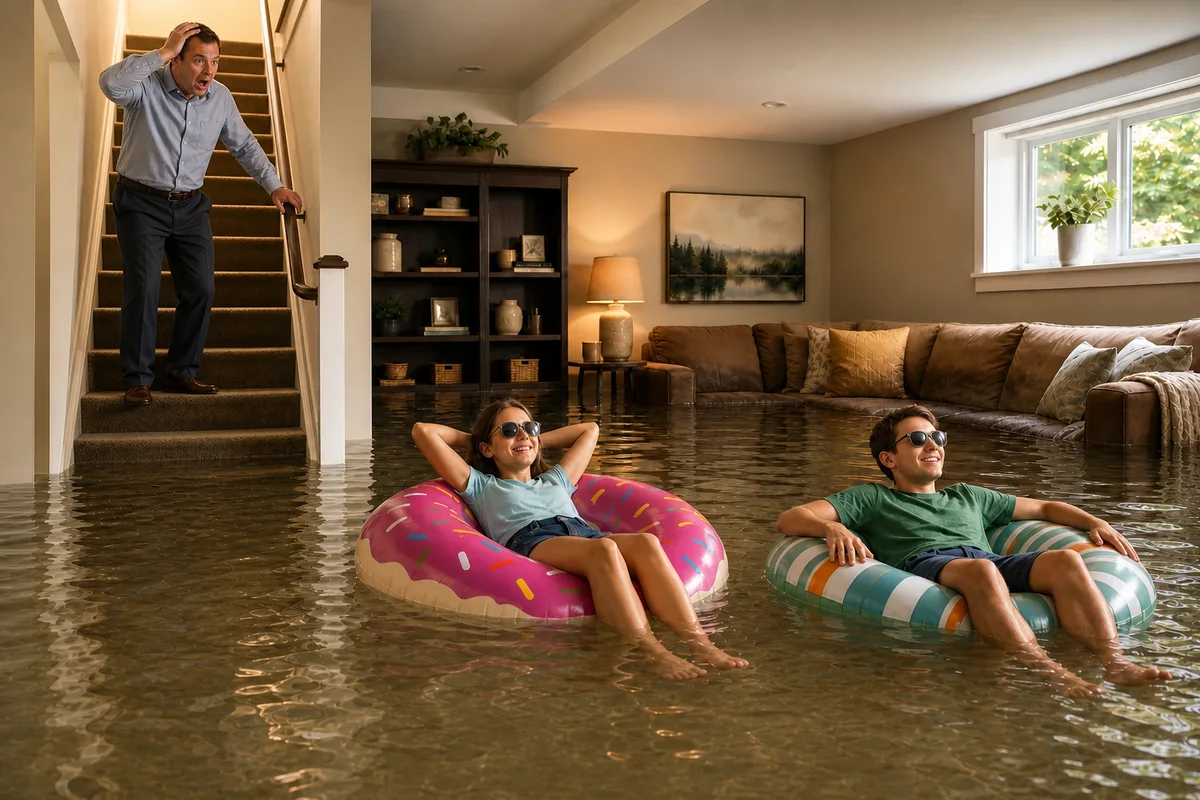
Check for immediate danger
Keep people and pets out of affected rooms when water is near outlets, appliances, wiring, or the electrical panel. The CDC advises that you should not enter standing water to reach the main power switch. Call an electrician if the shutoff cannot be reached safely.
Leave and call 911 if there is a fire, suspected gas leak, structural movement, or another immediate threat to life.
Stop the water source—only if safe
For an interior plumbing leak, close the nearest fixture shutoff or the home’s main water valve if you can reach and operate it safely. Do not climb onto unstable surfaces, open damaged ceilings, or enter contaminated water to locate a valve.
Consider where the water came from
May begin relatively clean but can pick up contaminants as it moves through building materials.
May contain detergents, food residue, or microorganisms and warrants additional precautions.
Treat as contaminated. Avoid contact and do not circulate air across the affected area.
Photograph and record the damage
When it is safe, take wide and close photos of the water source, water lines, every affected room, flooring, walls, cabinetry, and damaged belongings. Record the discovery time and actions taken. FEMA recommends documenting damage before discarding items and organizing information room by room.
Take only safe, reasonable mitigation steps
Move dry belongings away from the affected area and catch active drips when this can be done safely. Do not use an ordinary vacuum or electrical equipment while standing in water. Do not start fans when sewage, outdoor floodwater, or visible mold may be present.
The EPA uses 24–48 hours as a general response window for clean-water damage and mold prevention, while emphasizing that it is a guideline rather than a guarantee.
Contact the appropriate people
- 911: fire, gas, structural collapse, or immediate danger.
- Electrician: wet electrical equipment or a panel you cannot safely reach.
- Plumber: an active plumbing source that cannot be isolated.
- Restoration contractor: water extraction, contamination control, moisture assessment, and structural drying.
- Insurance company: report the loss and request its documentation requirements.